


September 10, 2025
Service Pups: Loyal Companions in the Kool Kommunity
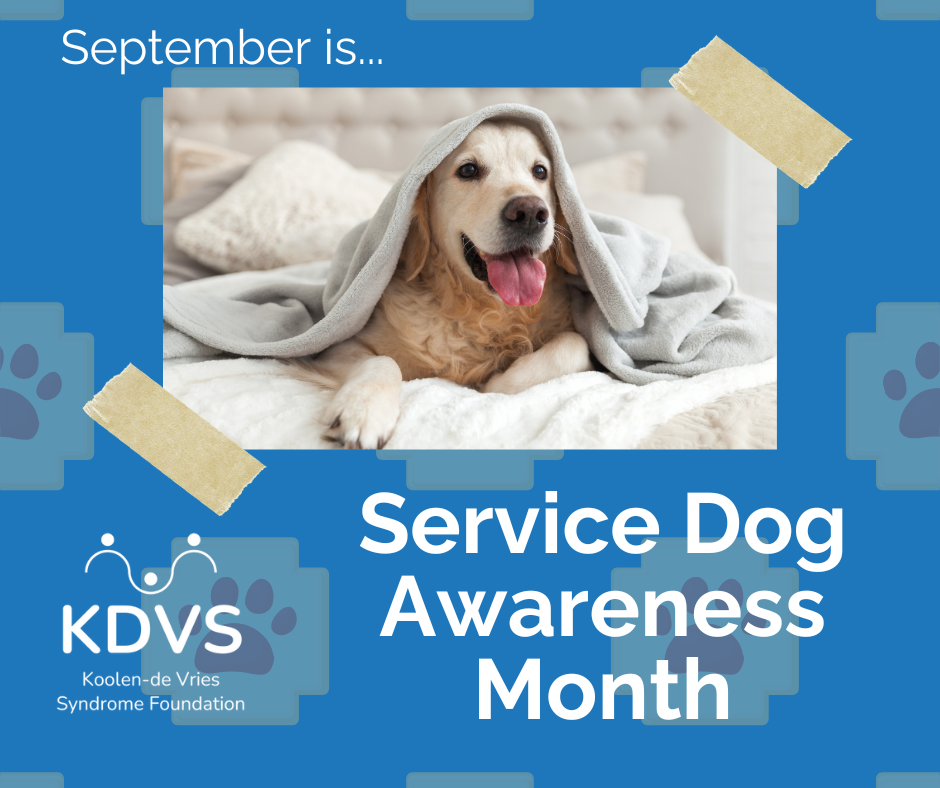
September is Service Dog Awareness Month; a perfect time to shine a spotlight on the incredible pups who play such an important role in the lives of individuals with Koolen-de Vries Syndrome (KdVS).
In our Kool Kommunity, we see firsthand how service dogs aren’t just pets they are trusted companions, caregivers and life-changing partners. These dogs help families feel more secure, supported and connected as they navigate daily life.
Why Service Dogs Matter in KdVS
Service dogs are specially trained to provide assistance and reassurance in unique ways that benefit individuals with KdVS. Some of the most impactful ways they help include:
- Seizure detection and response 🧠🐾
Many service dogs can sense seizure activity before it begins, giving families a chance to prepare or help keep their loved one safe. They can also be trained to respond during and after a seizure—by alerting caregivers, retrieving medication, or offering comfort. - Mobility and stability support 🦴🐕
For individuals who experience low muscle tone, coordination challenges, or need assistance with walking, service dogs can help with balance and mobility. - Comfort and anxiety reduction 💙
Service dogs provide emotional reassurance during medical visits, therapies, or transitions. Their calming presence can reduce stress and help create a sense of safety. - Everyday independence 🌟
From picking up dropped items to opening doors, service dogs empower individuals to engage more fully with the world around them.
Getting Started: How to Explore a Service Dog for Your Loved One
The process of obtaining a service dog can take time and research, but families in the Kool Kommunity have found the journey rewarding. Here are a few tips to start:
- Learn about types of service dogs
Not all service dogs are trained the same way. Some specialize in seizure detection, while others focus on mobility or emotional support. Identify your family’s most important needs. - Connect with reputable organizations
Look for accredited service dog organizations that specialize in medical and neurological needs. Some well-known national programs include Canine Companions, 4 Paws for Ability, and Dogs for Better Lives. - Ask about costs and wait times
The process can take months to years, and there are often costs involved. Some organizations provide financial assistance, grants, or fundraising opportunities to help cover expenses. - Talk with your care team
Your loved one’s neurologist, geneticist, or therapists may be able to offer guidance on whether a service dog is a good fit and what type of training would be most beneficial.
Celebrating Our Kool Pups 🐶💙
We are so grateful for the service dogs who are already making a difference in our Kool Kommunity. They bring safety, comfort, and independence to individuals with KdVS—and unconditional love every step of the way.
This month, we invite families to share photos and stories of their service pups with us. Let’s celebrate these four-legged heroes together!
#KoolKommunity #ServiceDogAwarenessMonth #KdVSFoundation #KoolPups