


July 17, 2025
Our Kool Story: From Diagnosis to Deep Joy
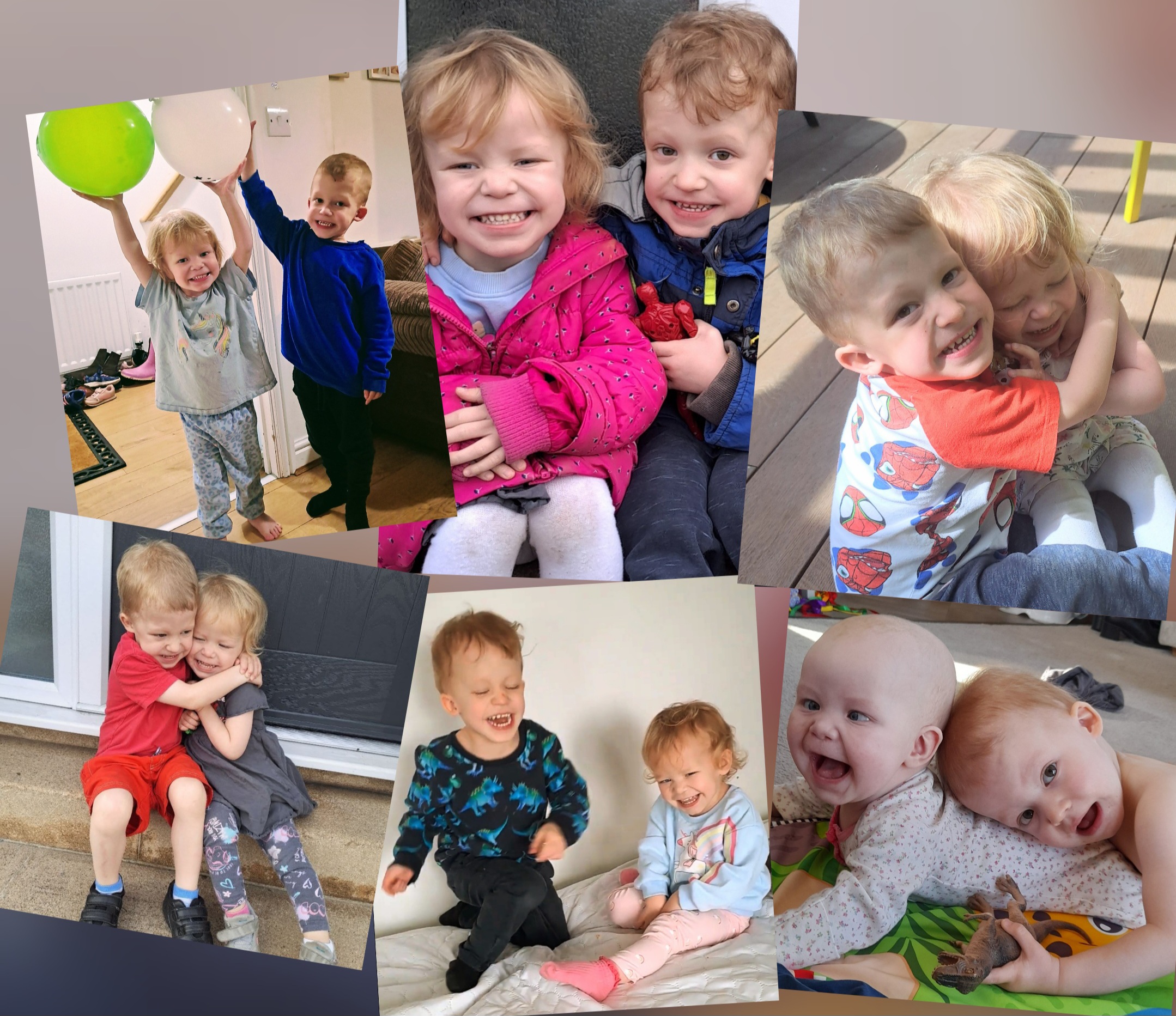
It all started with an email.
After 14 months of waiting, we finally had an answer. Our geneticist had written to
say our son had received a diagnosis — one that explained why he was born with
hypotonia. My heart raced as I rushed to tell my husband. We quickly agreed to
speak with the geneticist directly, desperate to understand more. Sitting side by side
with the phone on loudspeaker between us, we held our breath.
Then came the words. “Your son has Koolen-de Vries syndrome.” Just hearing the
name flooded our minds with questions. What does that mean? How rare is it? What
does this mean for his future? We’d never heard of it before.
But before we could process that, the next words landed even harder:
“He inherited it from you, Becky.”
Silence. I felt the air leave my lungs. What began as a search for answers suddenly
became something much bigger — not just about our son, but about me. I hadn’t
even known I carried this rare condition. And now, it was part of our story forever.
Then came one more shock.
At the time, I was four months pregnant with our third precious child. We were told
there was a 50% chance our unborn baby would also have Koolen-de Vries
syndrome. The news came like a wave — one piece after another. We had started
the call hoping for clarity and ended it stepping into a new reality. One we hadn’t
expected, but one we were determined to face with love, faith, and a whole lot of
courage.
After everything we’d already been through with Joshy — and with that 50/50 chance
still lingering in my mind — I was nervous throughout the rest of my pregnancy. But I
also knew I couldn’t let fear steal the joy of meeting my baby girl. And when she
arrived — safe, calm, and warm in my arms — I exhaled with the hugest sigh of
gratitude. No NICU. No wires. No feeding tubes or oxygen masks. Just her. I was so
relieved. But I’d be lying if I said the question didn’t cross my mind: Will she be a
Kool Kid too?
Sure enough, just like Joshy, our little Avary was later diagnosed with Koolen-de
Vries syndrome and hypotonia.
But this time, my heart didn’t break. By then, I had come to know something far
stronger than fear: love. Fierce, unshakeable, all-consuming love. Even with the
questions and uncertainty swirling, my heart was completely and utterly hers. My
precious girl — just as she was — and absolutely worthy of all the love in the world.
We faced another long wait to get her into physiotherapy, but I didn’t crumble. I
remembered Joshy’s journey — how, with nurturing, encouragement, and support,
he was walking before his first birthday — and I already had a good sense of what
helped. So I began gently working with Avary at home. Daily little exercises.
Cheering her on. Meeting her where she was.
And slowly but surely, her strength and confidence grew.
By the time she was finally seen she was already making steady progress and
continued to do so. Then, just like Joshy she was discharged from physiotherapy.
And I felt so proud. Not just of her, but of us. Of the showing up, the loving fiercely,
the trusting deeply — and the celebrating of every tiny victory along the way. Today,
both Joshy and Avary run around the house and anywhere they can with wild joy
and big personalities. And every time I see them like that, I feel this wave of gratitude
wash over me.
After having Isabella — my first daughter — I never thought twice about milestones. I
assumed they just happened. But when you’ve been told your child may never
walk… never talk… never see… never hear — you never forget that moment. I still
remember sitting in NICU after Joshy’s MRI, hearing those devastating words. Time
stood still. The world outside kept going, but I was frozen in disbelief.
And yet — here we are. Happy, healthy and thriving.
When speech therapy came next, our focus shifted. It wasn’t about waiting for
perfectly formed sentences — it was about the trying. The babbles. The attempts.
The effort. I’ll never forget the day Joshy said “Hi.” It was soft and simple — but to
me, it felt like fireworks.
And then came the word I had longed to hear: Mama.
When both Joshy and Avary said it for the first time, I wept on the inside and shouted
with joy on the outside. That one word held so much. It carried NICU memories,
whispered prayers, moments of doubt, and fragile hope.
I’ll never hear “Mama” the same way again.
It’s not just their speech — it’s their comprehension, too. Their understanding leaves
me in awe. Every time they respond to a question or follow a request, I pause and
thank God. Because when you’ve been warned your children may never understand
you — and then they do — it’s golden. It’s not just language. It’s connection. And I
treasure it more than words can say.
Bracing for Year One: Advocating Through the Unknown
My awesome kool dude is starting Year One this September, and while I’m so proud
of him, I know it’s going to stretch and challenge him — especially as we continue
working on his speech and language development.
Every single letter he writes feels like a celebration in our home. It’s not “just” a letter
— it’s progress. It’s effort. It’s a step closer to unlocking the world of reading and
writing. And when progress isn’t linear, every small win becomes a big deal.
I’ve learned that when you’re raising a child with additional needs, the roadmap for
milestones isn’t always clear. There’s a lot of unknown ahead as he moves through
school. And for someone like me who lives with anxiety, the unpredictability of it all
can feel overwhelming at times.
But here’s what I do know: I will always show up for him. I’ll keep supporting him with
everything I’ve got. I’ll keep advocating, asking questions, making sure his needs are
seen, heard, and met — even if it means having the same conversations over and
over until the system listens.
The leap into Year One feels huge, but he won’t be doing it alone.
One thing I’m incredibly grateful for is that he already has lots of friends in his class.
His confidence, his love for others, his infectious laugh — these are gifts I’ll keep
nurturing in him. Because beyond all the academic expectations, what I see is a
kind, bright, loving boy who belongs just as he is.
So yes, I’m anxious. But I’m also proud. I’m hopeful. And more than anything, I’m
ready to walk this next chapter with him, cheering louder than anyone as he
continues to grow.
Because progress isn’t just measured by grades or reports.
It’s measured in courage, effort, connection — and I see all of that in him already.
When the fear of the unknown feels overwhelming, I hold on tight to what I do know
and what I can do — and that’s to keep advocating, encouraging, and supporting him
with all I’ve got.
If you’re walking into the unknown with a child who needs extra support, know this —
you’re not failing by feeling anxious. You’re showing up. You’re advocating. You’re
loving. And that is more than enough .
But maybe one of the greatest joys of all as a rare mama is watching the two of my
kool kids together.
Their bond is beautiful — their own little language, endless laughter, made-up
games, running wild together. They chase, they play, they comfort. And when one of
them is sad, the other just knows — without a word. They don’t just love each other.
They know each other. It’s something deeper than sibling love — it’s soul-deep. A
connection stitched together before they ever met.
And to witness it? To be their mum? It’s the greatest privilege of my life. This life
might look different to what I imagined. But I wouldn’t trade it for anything.
Because these aren’t just milestones.
These are victories we were told might never come.
Victories we fought for.
Joy we couldn’t always see coming but arrived as every day miracles.
Moments we hold a little tighter because we know what it took to get here.
This is joy that runs deep.
Remember this: Don’t let someone else’s prediction define your story.
You might be handed a diagnosis, a label, or a fear-filled forecast — but you still get
to choose how you show up, how you love, and how you fight for the moments that
matter. Because in the end, it’s not about what they say might never happen — it’s
about what you choose to believe is still possible.
This is what thriving looks like.