


Timothe “Tam”
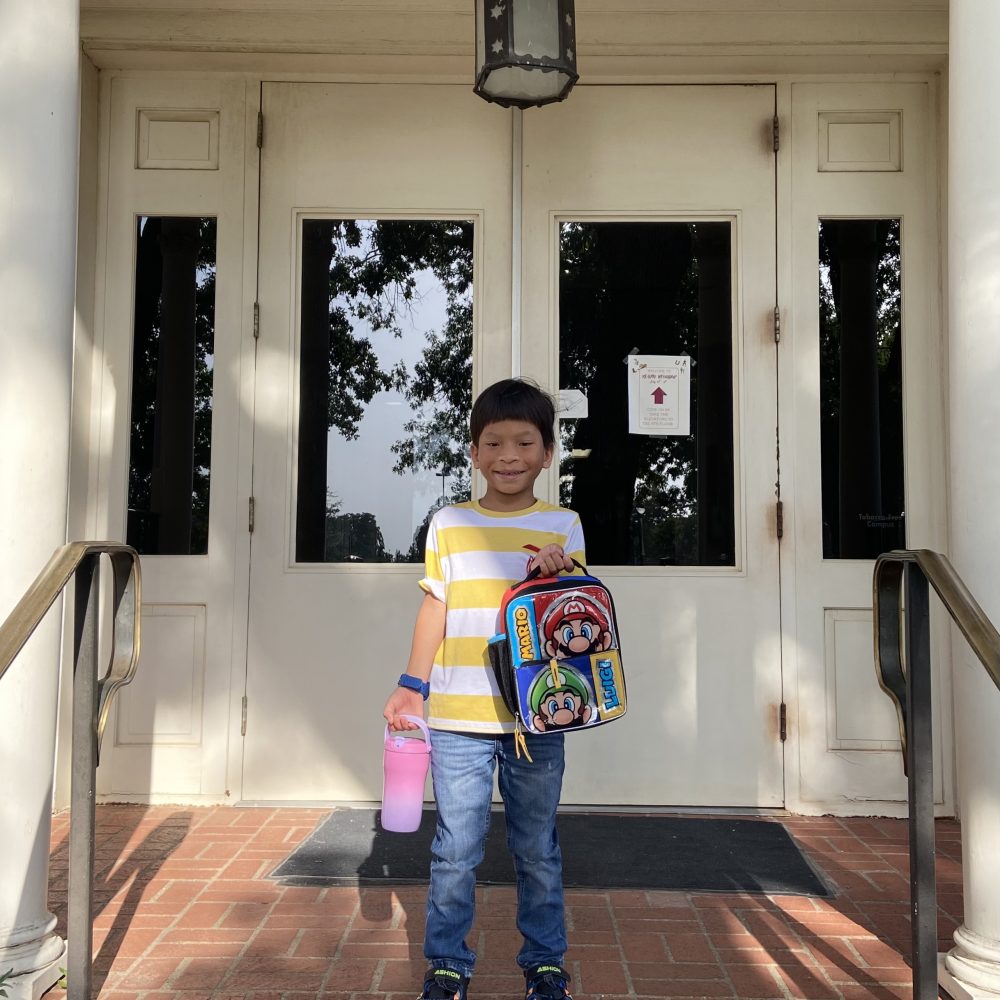
Age: 9
Parent's First Name(s): Laci
Parent's Last Name(s): Storz
Mutation or Deletion: Deletion
Diagnosis Date: 06/23/2025
Donate“ There’s beauty in the detour-your story is exactly what the world needs. ”


How did you feel when your child was first diagnosed?
At first, I was overwhelmed—but then I realized this was exactly what I had been advocating for all along. For the first time, my child was no longer a mystery. We finally had answers, and that brought me peace.
What does your KdVS individual love the most?
Tam loves people—he collects friends like other kids collect rocks.
How does KdVS affect your child?
Koolen-de Vries Syndrome shows up in so many ways, and for Tam, it’s a mix of challenges and strengths. He has low muscle tone, which makes things like chewing, jumping, or writing harder—but he’s determined and keeps trying. Expressive language is one of his biggest hurdles. He knows so much, but getting his thoughts out is tough, so we use AAC and sign to help him communicate. He also has mild hearing loss, so we stay on top of that with audiology and support.
How has KdVS affected your entire family?
It’s not always easy. There are doctor appointments, therapy sessions, school meetings, and moments of grief for the things that feel harder than they should. But there’s also so much joy. Tam teaches us to slow down, to find the good in the little things, and to love without conditions.
What is the hardest part about having KdVS?
One of the hardest things for Tam is expressing himself. He understands so much more than he can say, and that gap can be frustrating for him—and heartbreaking for us. He has so much to share, but the words don’t always come easily. We use AAC and sign to support him, but it’s still a daily challenge.
What is the hardest part about being a KdVS parent?
The hardest part is knowing there’s so much going on inside your child—and not always being able to reach it. Watching your child struggle to speak, to be understood, or to be included can feel like a quiet kind of grief. You want to fix things, to make life easier for them, but so much is out of your control.
What is the biggest misconception about being a KdVS parent or an individual with KdVS?
That it’s just a developmental delay. People often assume Tam will “catch up” or that he just needs more practice—but Koolen-de Vries Syndrome is a genetic condition that affects nearly every system in the body. It’s not something he will outgrow. Another big misconception is that because he looks “typical,” his challenges must be mild. But what you don’t see is the invisible work he puts in every day just to keep up—the sensory overload, the speech frustration, the fatigue from low muscle tone. And maybe the hardest misconception? That differences mean less. Tam may communicate differently, learn differently, or move at his own pace—but he is not less. He’s smart, funny, intuitive, and full of life. Different doesn’t mean broken—it just means we have to listen and love in different ways.
What would you tell newly diagnosed parents about KdVS?
Take a breath. I know your world might feel upside down right now. You’re probably Googling more than sleeping, wondering what this means for your child and for your family. I’ve been there. It’s overwhelming, confusing, and sometimes scary. But here’s what I can tell you: your child is still your child. That hasn’t changed. The diagnosis just gives you a map—it doesn’t define their future. It explains things that may never have made sense before, and it opens the door to support, resources, and community. There will be hard days. But there will also be joy—the kind that sneaks up on you in small victories and surprising moments. You’ll see strength in your child you didn’t know was possible. And you’ll grow too. Find your people. Lean on the KdVS community. Ask questions. Celebrate progress, no matter how small. And remind yourself often: you don’t have to know everything today. You just have to keep showing up with love. You’re not alone—and your child is not broken. They are uniquely wired, wonderfully made, and so deeply worth it.
What would you tell doctors, teachers and therapists about KdVS individuals?
First, thank you. Thank you for being on this journey with us. It takes a team, and your support matters more than we can ever fully say. But there’s something important I want you to know: Tam is not just a diagnosis. He’s not just test scores, delays, or therapy goals. He’s a whole child—with feelings, ideas, and a deep desire to connect. He’s curious, funny, sensitive, and social. He works incredibly hard, even when the world feels too loud or the words just won’t come. What we ask is that you look past what’s hard and see who he is. We ask that you presume competence, even when he can’t express everything he knows. We ask that you meet him where he is, and help him grow without rushing or underestimating him. We want you to know that communication may look different—and that’s okay. Progress might be slower or come in unexpected ways—but it’s still progress. Please partner with us. Ask questions. Share ideas. Let’s collaborate with curiosity and flexibility. With the right support and belief, Tam thrives.
Why are you asking people to donate to the KdVS Foundation?
Because families like ours need it. When Tam was diagnosed with KdVS, we were handed a piece of paper and sent on our way. No roadmap. No treatment plan. Just questions. The KdVS Foundation was one of the only places where we found real answers—and real community. They provide research, awareness, family support, and connection in a world that can feel incredibly isolating. Donating means funding research that could improve medical care, therapies, and outcomes. It means empowering newly diagnosed families with resources and hope. It means making sure our kids are seen, understood, and valued. This condition is rare—but our children are not invisible. Your support helps light the path forward, not just for Tam, but for every family navigating life with KdVS.